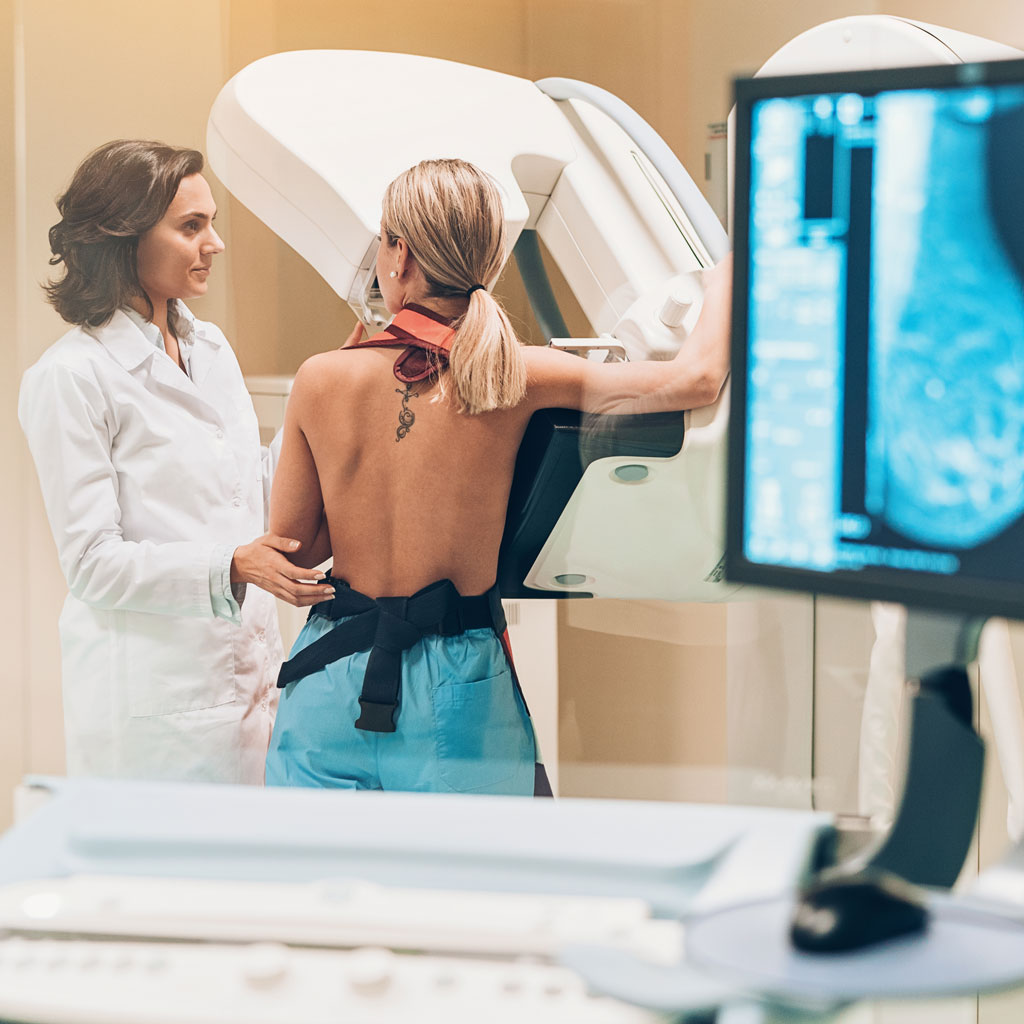
When Should You Start Getting a Mammogram?
Medically reviewed by Jeffrey Conaway, MD
If you’ve ever Googled “when should you start getting a mammogram?” and come away with a range of answers, you’re not the first. Guidelines from different medical organizations have shifted over the years, and they don’t always agree.
Here’s a one-stop guide to help you understand mammogram screening guidelines and when you should start getting a mammogram.
Why Do Guidelines Differ?
The American Cancer Society, the U.S. Preventive Services Task Force, and the American College of Radiology all have slightly different stances on breast cancer screening guidelines. The reason comes down to how each organization weighs the benefits of early detection against factors like false positives, additional testing, and overdiagnosis. They all agree, however, that mammograms can save lives. The nuance is in the timing, which is where your personal history comes into play.
The Age-by-Age Mammogram Breakdown
YOUR 20s & 30s
For most women in their 20s and 30s, routine mammograms aren’t yet on the schedule. However, you should still talk to your doctor about your family history, especially first-degree relatives who’ve been diagnosed with breast or ovarian cancer. If you have a strong family history or a known BRCA gene mutation, your doctor may recommend starting screening as early as age 25 or 30. This is also the right time to get comfortable with self-exams so you know what’s normal for your body.
AGE 40
The American College of Radiology recommends annual mammograms starting at 40 for women of average risk, and the USPSTF updated its 2024 guidelines to align with that recommendation. The American Cancer Society says women should have the option to start at 40, with annual screenings strongly recommended by 45. Overall, age 40 is a widely supported starting point- and most radiologists and oncologists fully support that decision.
AGES 45–54
This is the decade with the most consensus across organizations. Annual mammograms are recommended virtually universally for women in this age range, and if you haven’t started yet, 45 is the latest age most guidelines recommend starting. It’s also when dense breast tissue (which can make imaging trickier to read) tends to decrease, often resulting in clearer mammogram results.
AGE 55 & BEYOND
After 55, some guidelines say it’s generally ok to get a mammogram every other year for average-risk women in good health. Others, including the American College of Radiology, continue to recommend annual screening. The key thing is that you keep going as long as you’re healthy and would pursue treatment if something were found. There’s no universal “stop age”.
Higher risk? Earlier screening matters
Some women should start breast cancer screening earlier than the standard guidelines suggest. A strong family history, particularly a mother, sister, or daughter diagnosed with breast cancer, especially before age 50, is one of the most important risk factors to discuss with your doctor. Carrying a BRCA1 or BRCA2 gene mutation, having extremely dense breast tissue, or having received radiation therapy to the chest before age 30 can all elevate your risk significantly. A personal history of certain benign breast conditions may also be a factor. If any of these apply to you, ask your doctor about getting a formal risk assessment. High-risk women are often recommended to begin annual mammograms at 30, or even earlier, and may benefit from supplemental screening like breast MRI alongside their annual mammogram.
What about dense breasts?
Dense breast tissue is more common than most people realize! Roughly 40 to 50 percent of women have it. Density isn’t something you can feel; it shows up on your mammogram report. It matters for two reasons: dense tissue can slightly mask tumors on imaging, and it’s also associated with a modestly higher risk of breast cancer. If you have dense breasts, your provider may recommend supplemental screening with an ultrasound or an MRI in addition to your regular mammogram. It’s worth asking about after your first screening.
The bottom line: When Should You Start Getting a Mammogram?
There’s no one-size-fits-all answer to when to start getting mammograms, but there is a right answer for you, based on your age, risk factors, and an honest conversation with your doctor. What’s universal is that regular screening is one of the most powerful tools we have for catching breast cancer early.
Get the Most Comfortable Mammogram at Clarity Care
Mammograms have a reputation for being uncomfortable, and that reputation keeps a lot of women from scheduling them. That’s exactly why Clarity Care set out to change the experience entirely. Clarity Care is Kansas City’s most comfortable mammogram provider- and it’s not just a tagline!
Clarity Care uses curved paddle mammogram technology, which makes a world of difference compared to the flat compression paddles used in traditional mammography. The curved paddle is designed to contour more naturally to the shape of the breast, which results in more comfortable compression, better positioning, and better image quality.
If you’re in the Kansas City area and want an experience that trades discomfort for confidence, Clarity Care’s curved paddle technique is absolutely worth the trip. Give us a call or schedule online.